Loading...
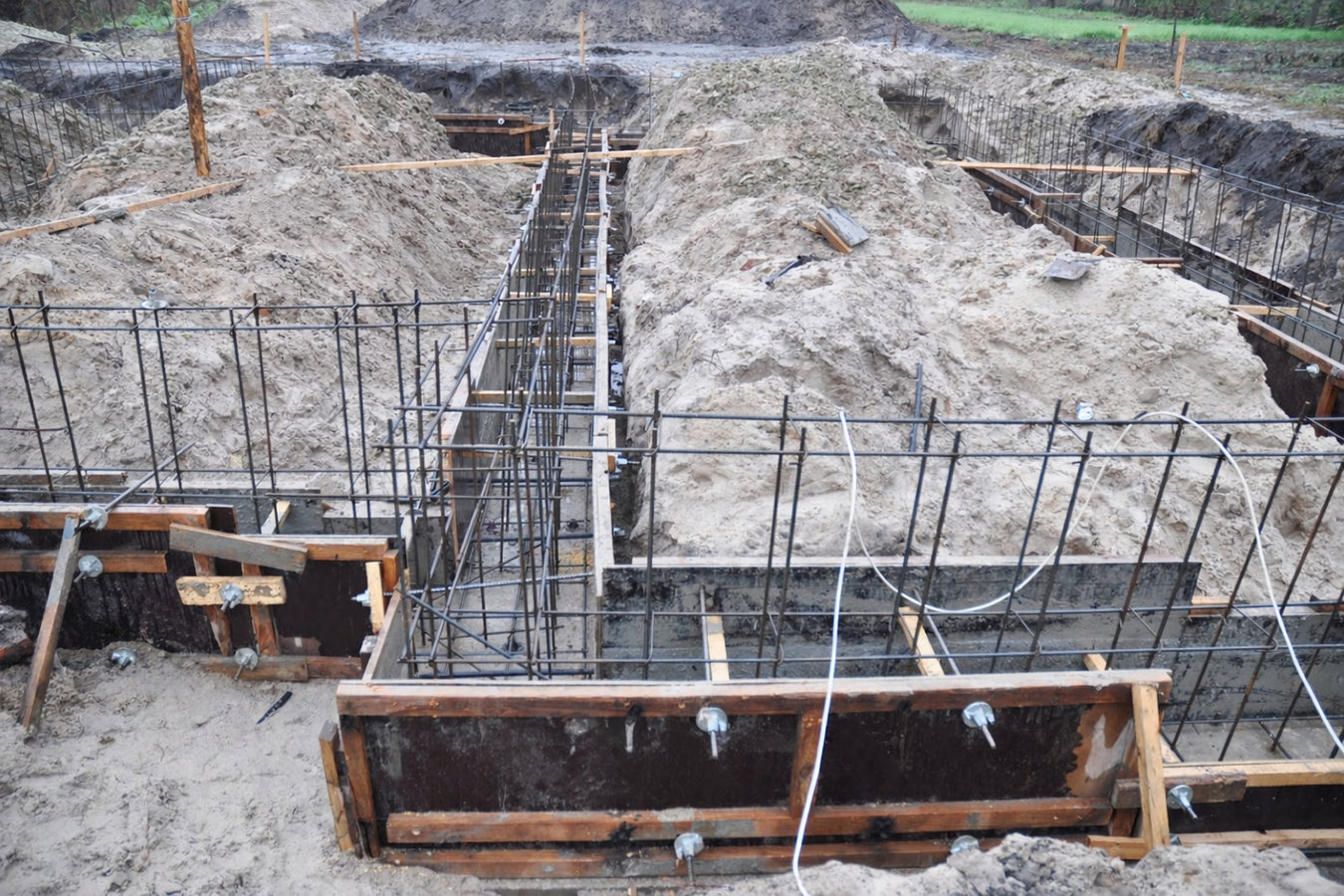
El Monte's clay soils move with the seasons, and the Whittier Fault is not far away. Every footing we pour is designed for both - with steel reinforcement, the right depth, and a permit that passes city inspection before anything is covered.
Concrete footings in El Monte are the underground concrete bases that hold up structures - additions, ADUs, detached garages, fences, and patio covers - poured into trenches or drilled holes after the permit is approved and before framing begins, with most standard residential projects taking one to two days of active work and a total timeline of three to six weeks when the permit and curing period are included.
What makes footings in El Monte more demanding than in other parts of Southern California is the combination of expansive clay soils and the region's seismic exposure. The clay swells when it rains and shrinks when it dries, and that movement puts ongoing stress on anything embedded in it. California's seismic requirements for this area mean footings must be reinforced and connected differently than in lower-risk states. A contractor who does not know this area will underbuild for the soil and undersize for the seismic load - and you will not know that until something shifts.
Homeowners building larger structures - full room additions or new construction - may find that what they actually need is a complete foundation installation rather than individual footings. The site visit is where we clarify which scope fits your project.
If you are adding a room, building a garage, or putting up an ADU on your El Monte property, new concrete footings are required before any framing can begin. El Monte's building department includes footing inspection in the permit process. If a contractor tells you footings are not needed for your addition, get a second opinion before proceeding.
Diagonal cracks spreading from the corners of door frames or windows are one of the clearest signs that the ground beneath your home has shifted. In El Monte, expansive clay soil is a common cause - it swells and shrinks with seasonal moisture, putting uneven pressure on older footings. Seeing this pattern at multiple locations is worth a professional assessment.
When a home's footings shift, the door and window frames go slightly out of square. Doors that drag on the floor, latches that no longer line up, or visible gaps at the top of a window frame are early signs of movement below. This is the kind of symptom that gets more expensive to address the longer it is ignored.
If a fence post is leaning, a deck is pulling away from the house, or a patio cover is visibly tilted, the footing underneath it may have failed or was never adequate. Older El Monte properties sometimes have structures that were added in the 1960s or 1970s without proper footings. A leaning structure is a safety issue, not just a cosmetic one.
We pour footings for a wide range of residential projects in El Monte - from small pier footings for a fence replacement to continuous wall footings for a full room addition or accessory dwelling unit. The type of footing your project needs depends on what is being built above it, what the soil conditions are on your specific lot, and what the city's plan check determines during the permit review process.
ADU projects make up a growing share of our footing work in El Monte. California's push to add housing has made ADUs common across the San Gabriel Valley, and El Monte's building department has a well-established process for reviewing ADU footing plans. We handle the engineering coordination and permit submission so the process moves as quickly as the city's review timeline allows.
For homeowners whose larger project scope includes both footings and a raised or poured foundation, we also provide complete foundation raising services for settled or damaged existing foundations. We can assess both needs at the same site visit.
Wall footings and pad footings for rooms, sunrooms, and structural extensions on existing El Monte homes.
Engineered footings for accessory dwelling units - sized for standalone loads and designed to pass El Monte's ADU-specific inspection requirements.
Continuous and pad footings for detached garages, workshops, and storage buildings on El Monte properties.
Drilled pier footings for fence posts and patio cover columns - often needed when replacing structures that were originally built without proper support.
El Monte sits in the San Gabriel Valley on soils mapped by the U.S. Geological Survey as high in expansive clay content. The seasonal swelling and shrinking of this soil is the most common cause of footing failure on older El Monte properties - not poor concrete, but inadequate depth or width for what is actually underground. Getting to stable soil below the active clay zone is critical, and the correct depth varies by location and project type.
El Monte's position near the Whittier Fault and Raymond Fault means the seismic design requirements here are meaningfully different from what applies in lower-risk parts of California. The California Seismic Safety Commission classifies this region in a high seismic design category, and that directly affects how footings must be reinforced and how they tie into the structure above them. A contractor who has not worked in this area regularly will not have that knowledge built into their standard approach.
We complete footing projects for homeowners in West Covina, Covina, and Azusa across the San Gabriel Valley, where the same clay soil and seismic considerations apply. The experience transfers directly to every El Monte project we take on.
We ask what type of structure is going in, roughly where on your property, and whether any permits have been discussed with the city. We schedule a site visit before giving you a written number - footing pricing depends heavily on what we find. We reply within 1 business day and come to your El Monte property at no charge.
For almost any footing project in El Monte, we pull the required permit from the city's Building and Safety Division before any digging starts. We submit the plans, pay the fees, and manage the process. Depending on scope, plan check takes anywhere from a few days to a couple of weeks - we build this into your schedule from the start.
With the permit in hand, we call 811 to locate any underground utilities, then dig the trenches or holes to the approved depth. Steel reinforcing bars are placed inside the forms. A city inspector visits at this point - before the concrete is poured - to verify that the sizing and placement match the approved plans. Nothing gets covered until the inspector signs off.
The concrete is poured once the pre-pour inspection is complete. The area needs to stay undisturbed for at least a week before any framing or loading begins - your contractor will give you the specific wait time based on footing size and current weather. When the project closes, you receive signed permit documentation confirming the work passed inspection. Keep it with your home's records.
We handle the permit process from start to finish and give you a written schedule before work begins. No commitment required to get an estimate.
(626) 416-2401Every footing we pour is covered by an active California Contractors State License Board C-8 Concrete Contractor license. You can look up our license number on the CSLB website in about two minutes - it shows current license status and any disciplinary history. We encourage every homeowner to verify before signing anything.
El Monte's clay-heavy soils expand and contract with every wet and dry season. Footings that are not designed to account for that movement can shift, crack, or settle - and pull the structure above them with it. We assess your specific site before finalizing any design, and we size every footing for what is actually under your yard.
El Monte sits near the Whittier Fault and Raymond Fault in one of California's most seismically active regions. The California Seismic Safety Commission maps El Monte in a high-risk zone. Every footing we install includes the steel reinforcement and connection details required by current California building code for this area - not the lighter standards in place when most of El Monte's homes were first built.
Since 2022, we have completed footing projects for additions, ADUs, garages, and structural repairs across El Monte and the surrounding San Gabriel Valley communities. El Monte's ADU permit process has become one of the more common project types we manage, and we know what the city's inspectors are looking for at the pre-pour stage.
Every footing we pour is permitted, inspected, and documented - the same standard any experienced concrete pad contractor working in Southern California should meet. The American Society of Concrete Contractors publishes standards for concrete work in seismically active regions - we follow them, and so does the city inspector who checks our work before the concrete goes in. When the job is done, the permit paperwork is yours to keep.
Lifting and releveling an existing foundation that has settled unevenly - often the next step after a footing inspection reveals movement below an older El Monte home.
Learn moreComplete foundation builds for new construction or full replacements, where a footing assessment is the starting point before any concrete work begins.
Learn moreADU and addition permits move through El Monte's Building and Safety Division faster when the application goes in early - call or submit a request today and we will get back to you within 1 business day.