Loading...
El Monte's clay-heavy soil and active fault zone make foundation work more demanding than in most areas. We build slab foundations that are designed for those conditions - not just poured and hoped for the best.
Slab foundation building in El Monte means pouring a single reinforced concrete pad directly on the ground that supports the entire structure above it - most residential projects take three to seven days of physical work, plus permit review time and a curing period before framing can begin.
Most homes in El Monte were built on slabs between the 1940s and 1970s - and while the basic concept has not changed, the standards for soil preparation, steel reinforcement, and seismic design have changed significantly. If you are replacing an original slab or building a new structure on your property, the old-standard pour that was acceptable 60 years ago is not what the city will inspect and approve today. The San Gabriel Valley's clay soils add another layer of complexity: a contractor who treats every slab the same regardless of soil conditions is leaving you with a foundation that will move.
We also handle foundation installation for more complex projects, including raised foundations and multi-phase builds. If you are not sure which type your project needs, the site visit is the right place to start - we will tell you plainly what the structure requires.
If you have patched cracks in tile, hardwood, or drywall and they keep reappearing in the same spots, the foundation may be moving. In El Monte, the clay-heavy soil expands with winter rain and shrinks in dry summer heat - that cycle stresses a slab and shows up as recurring interior cracks. This does not always mean a full rebuild, but it is worth a professional look.
When a slab shifts or settles unevenly, the home's frame moves with it. Doors or windows that suddenly drag, stick, or no longer sit flush in their frames are often the first visible sign. If this is happening in multiple places at once, a foundation issue is more likely than a simple humidity problem.
Adding a room, garage, accessory dwelling unit, or any permanent structure to your El Monte property requires a new slab foundation for that addition. El Monte's building code requires a permitted foundation for any new habitable or attached structure - you cannot simply pour concrete without a plan and inspection.
If water collects against the base of your home after winter rain, it is working into the soil beneath your slab. Over time, that moisture causes the clay to swell and then shrink as it dries - stressing the concrete repeatedly. If this pattern is regular on your property, the drainage and possibly the foundation need attention.
We build new slab foundations for homes, additions, garages, and accessory dwelling units throughout El Monte. Every project starts with a site assessment - we look at the soil, the grade of the land, and any structures nearby before we design the pour. That assessment drives the reinforcement specification, the thickness of the slab in load-bearing areas, and the moisture barrier and drainage gravel choices underneath. Skipping that step is how foundations fail within a few years on San Gabriel Valley clay.
For homeowners replacing a foundation on an older El Monte home - especially those built before 1980 - we often find original work that was built to standards that have since been updated for seismic safety and expansive soil conditions. The new slab is designed to current California requirements, which means more steel reinforcement and more attention to how the foundation connects to the framing above. We also coordinate the full permit and inspection process with El Monte's Building and Safety Division, so you do not have to manage that yourself. Homeowners who also need concrete footings for a connected structure or post anchors can have that work planned as part of the same project.
After the pour, we handle the curing period correctly - keeping the surface moist and, during El Monte's hot summers, protecting fresh concrete from setting too fast. The American Concrete Institute's guidance on hot-weather curing is built into how we close out every summer pour in this area.
Best for new construction, additions, and accessory dwelling units that need a code-compliant foundation built from the ground up.
Suited to El Monte homes built in the 1940s-1970s whose original foundations predate current seismic requirements.
A practical fit for detached structures on smaller El Monte lots where equipment access and neighbor proximity require careful planning.
Required for load-bearing wall locations and heavier structures where a standard uniform-thickness slab would be insufficient.
El Monte sits in the San Gabriel Valley on alluvial soils deposited over centuries by the San Gabriel River. A large portion of those soils contain significant clay - and clay is difficult for concrete. When El Monte's November-through-March rainy season saturates the ground, the clay swells. When the long dry summer follows, it shrinks back. A slab that was not specifically designed to handle that movement will show cracks within a few years, often traced directly to soil behavior rather than any flaw in the concrete itself.
The city's seismic setting compounds this. El Monte is near several active fault systems in one of the most seismically active parts of the country. California's building code requires foundations in this area to include steel reinforcement levels and connection details that go beyond what is standard in most other states - and El Monte's building inspectors enforce those requirements. Homeowners in Baldwin Park, Rosemead, and West Covina face the same combination of clay soil and seismic exposure - but El Monte's specific permit process and older housing stock create a distinct local context that a contractor needs to know before starting work.
A significant share of El Monte's housing was built in the 1950s, 1960s, and 1970s - homes that are 50 to 80 years old and often sitting on foundations that were built to the standards of the era. Those original slabs were frequently thinner, had lighter reinforcement, and did not address expansive soil behavior the way current practice requires. When those foundations need replacement, the project involves not just pouring new concrete but designing something better than what was there - which takes local experience with both the soil and the permit office.
We ask about the structure size, whether this is new construction or a replacement, and whether any soil assessments have been done. Most projects get a free on-site visit before we give you a written estimate, because your specific lot and soil conditions drive the final price. We reply within 1 business day.
We assess the grade, soil conditions, and any existing structures on your lot, then submit plans to El Monte's Building and Safety Division for the required permit. Permit review typically takes a few days to a few weeks - we factor this into the timeline we give you upfront so there are no surprises.
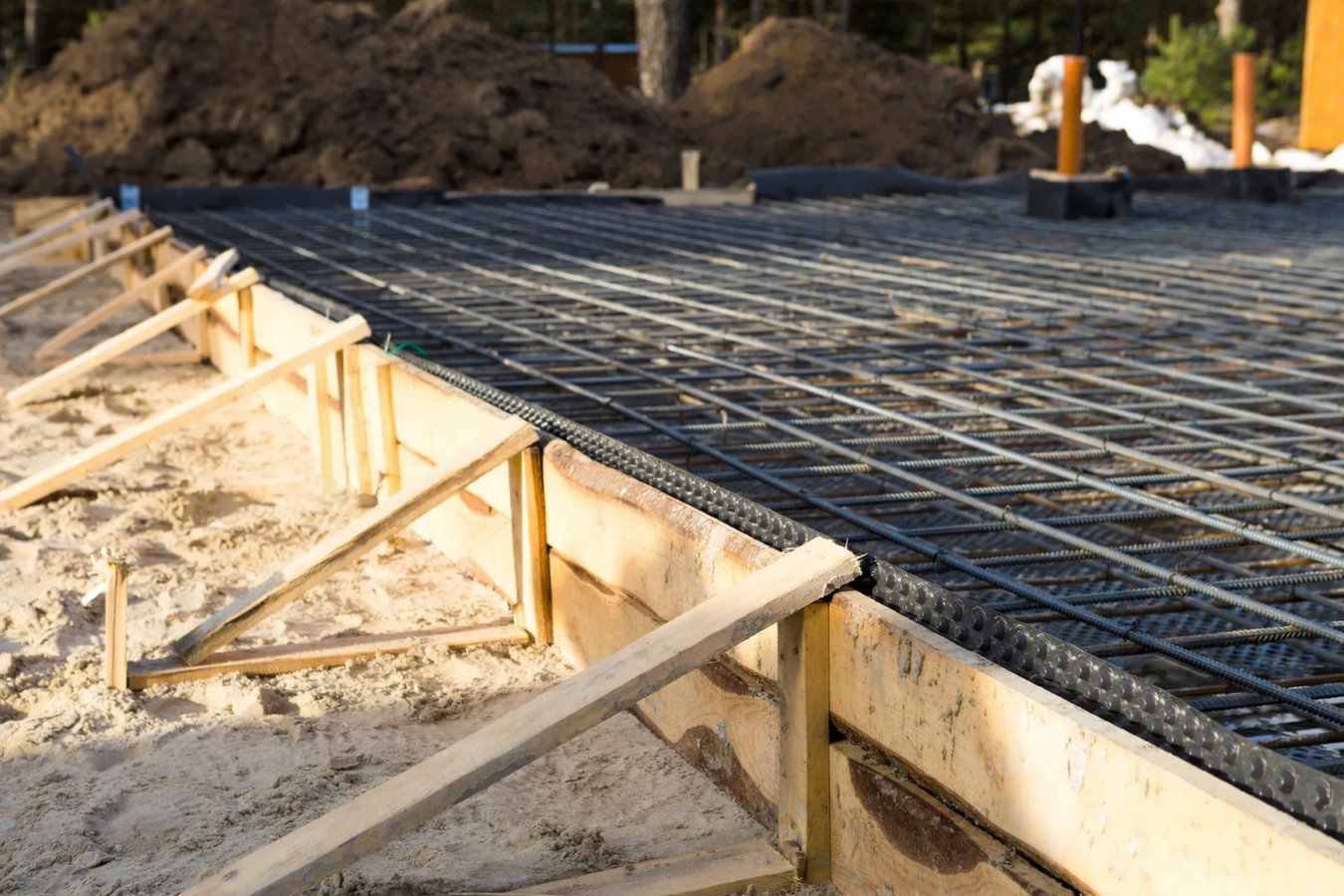
The crew excavates and grades the area, compacts the soil, lays gravel for drainage, and installs the steel reinforcement before any concrete is placed. A city inspector visits to verify the steel placement before the pour - nothing gets covered up until the inspector signs off.
The slab is poured in a single continuous operation and finished while still workable. In El Monte's summer heat, we schedule pours early in the morning to slow the set time. After a week of curing, framing and additional work can begin - and a final city inspection closes out the permit with documentation you keep with your home's records.
We visit your El Monte property, assess the soil conditions, and give you a written bid with no obligation. No permit paperwork for you to handle - we take care of all of it.
(626) 416-2401Every foundation we build is covered by an active California C-8 Concrete Contractor license and current liability insurance. You can look up our license number on the California Contractors State License Board website in about two minutes - it takes less time than a cup of coffee and is the fastest protection you have as a homeowner.
San Gabriel Valley clay expands when wet and shrinks when dry - a cycle that repeats every year. We account for that movement in every foundation we design here, with soil preparation, compaction, and reinforcement specifications that match local conditions. The California Geological Survey's mapping of expansive soils in this region is part of how we assess every lot we work on.
El Monte sits near several active fault systems in one of the most seismically active regions in the country. Every slab we build includes the steel reinforcement and connection details required by California's current seismic standards - not the lighter requirements that were in place when many El Monte homes were originally built in the 1950s and 1960s.
We apply for every permit ourselves, coordinate the inspections, and give you the signed documentation when the project closes. Skipping permits is not something we offer - not because of regulations, but because a foundation without a paper trail creates real problems for you at sale or refinance time.
El Monte's combination of clay soils, seismic exposure, and older housing stock means foundation work here requires more planning and more local knowledge than a contractor from outside the area typically brings. We have been working in this city and the surrounding San Gabriel Valley communities since 2022, and that work is what backs every estimate and every pour.
Full foundation installation for new construction and major rebuilds, including raised and complex foundation types.
Learn moreIndividual concrete footings for additions, detached structures, and posts that need a solid anchor in El Monte's clay soil.
Learn moreSpring and summer are the busiest seasons for foundation work in the San Gabriel Valley - the sooner you get an estimate and permit in process, the sooner we can lock in your start date.