Loading...
A foundation is the one part of your home you cannot go back and fix easily. We assess the soil, pull the permits, and build to current California seismic standards so the structure above it stays level and safe.
Foundation installation in El Monte covers the full process of building the concrete structure that supports your home - from soil assessment and permit application through excavation, steel placement, pour, and the final city inspection - most residential slab projects take one to two weeks of physical work with a total timeline of four to six weeks including permits.
The phrase "foundation installation" covers more than just pouring a flat slab. El Monte homeowners need foundations for new construction, for additions and ADUs on existing properties, for major rebuilds where the original 1950s or 1960s foundation no longer meets current seismic requirements, and for raised foundation systems on sloped lots or older properties. The right approach depends on what is already there - or not there - and what the soil under your specific lot will support. That is why a site visit and soil assessment come before any number, not after.
Homeowners who need a focused slab pour for an addition, garage, or ADU may find that a slab foundation build is the more direct path for their project. We can clarify which scope fits your situation on the first site visit - no commitment required.
If you have patched drywall or tile cracks and they reappear in the same spots, the movement is likely coming from the foundation. Diagonal cracks running from the corners of door frames or windows are a telling sign of shifting below. In El Monte, expansive clay soil is one of the most common causes - the foundation moves with the soil, and the home's frame shows it first.
A foundation that shifts causes the frame of the house to shift with it. Doors that drag on the floor, windows that require force to open, or gaps that appear where a frame meets the wall are often early signs of foundation movement. In older El Monte homes built before modern seismic standards, this can signal that the original foundation was undersized for local soil conditions.
If you can see the foundation - along the exterior base or in a crawl space - look for cracks wider than a hairline, sections that are flaking or crumbling, or concrete that appears wet or stained in dry conditions. These are signs the concrete has been compromised and may no longer be carrying the load safely. This kind of damage does not repair itself.
Any addition, accessory dwelling unit, or project that changes the structural load on your home almost always requires a new or upgraded foundation. El Monte's building department flags this during permit review, but knowing upfront lets you budget for it and plan the project correctly from the start rather than discovering it mid-construction.
We install residential foundations throughout El Monte for new construction, additions, accessory dwelling units, and full replacements on older homes. The process always starts with the ground - we arrange for a soil report from a licensed geotechnical engineer when the project warrants it, and we factor that report into every design decision before any digging begins. San Gabriel Valley clay behaves differently in wet and dry conditions, and a foundation that does not account for that will fail over time regardless of how well the concrete itself was poured.
For homeowners replacing a foundation on a 1940s-1970s El Monte home, we often find original work built to standards that have since been substantially updated for seismic performance and soil management. The new installation is designed to current California requirements - more steel, tighter connection details between the slab and the framing above, and proper vapor barriers and gravel drainage beneath. We also coordinate the full permit and inspection process with El Monte's Building and Safety Division. Homeowners who need concrete work on a connected commercial property can explore our concrete parking lot building service, which involves the same permit process and heavy-duty reinforcement standards.
El Monte's summer heat requires active management of fresh concrete - we schedule pours for early morning, keep the surface moist during curing, and follow the American Concrete Institute's guidance on hot-weather pours for every summer project. A pour that sets too fast in 95-degree heat produces a weak surface that shows problems within a year.
The most common type in Southern California - a flat reinforced concrete pad suited to El Monte's mild climate and clay-heavy soils when properly prepared.
A better fit for sloped lots or older El Monte properties where the existing structure uses a raised system and the repair must match it.
Separate foundation pours for new rooms, garages, or accessory dwelling units that connect to or sit adjacent to an existing structure.
Rebuilding the foundation on 1940s-1970s El Monte homes to current seismic and soil-management standards, starting with a soil assessment.
El Monte sits on alluvial soils deposited by the San Gabriel River, and much of that soil is clay-heavy. The California Geological Survey maps expansive soil zones across Southern California, and the San Gabriel Valley - including El Monte - is consistently identified as high-risk territory for foundation movement. That means every foundation design here needs to account for soils that swell during El Monte's November-through-March rain season and shrink back as the long dry summer sets in. That cycle repeats every year, and a slab that was not designed around it will show the results within a few years.
The seismic context is equally significant. El Monte sits near the Whittier Fault and other active systems in one of the most seismically active regions in the country. California's building code requires foundations in this area to be built with steel reinforcement levels and connection details that go well beyond what was standard when most of El Monte's housing stock was originally built. El Monte's building inspectors enforce those requirements, and a contractor who is not familiar with the current code - and the specific inspection steps at El Monte's Building and Safety Division - can create delays and compliance problems that fall on the homeowner. Neighbors in West Covina, Covina, and Alhambra face similar soil and seismic conditions but go through their own separate permit offices and inspection processes - experience in one city does not automatically transfer.
El Monte's older housing stock adds a third layer of complexity. Many homes in this city were built in the 1950s and 1960s on foundations that were thinner, had lighter reinforcement, and did not address expansive soil behavior the way current practice requires. When those foundations are replaced, the project involves not just pouring new concrete but improving on what was there - which means a contractor needs to understand both the original construction methods and the current standards. A structural engineer is often involved in the design phase, and El Monte's building department typically requires engineered plans for major foundation work on older homes.
We ask what type of project it is, the approximate size, and whether any soil testing has been done. Most reputable contractors will schedule a site visit before giving you a number - foundation pricing depends heavily on what they find when they see your specific property. We reply within 1 business day and come to you for the assessment.
Your contractor arranges for a soil report from a licensed engineer if one is required - soil samples from your property tell us what the ground is actually made of and how the design needs to respond. Once the design is finalized, we submit the permit application to El Monte's Building and Safety Division. Plan for one to three weeks for standard residential permit review.
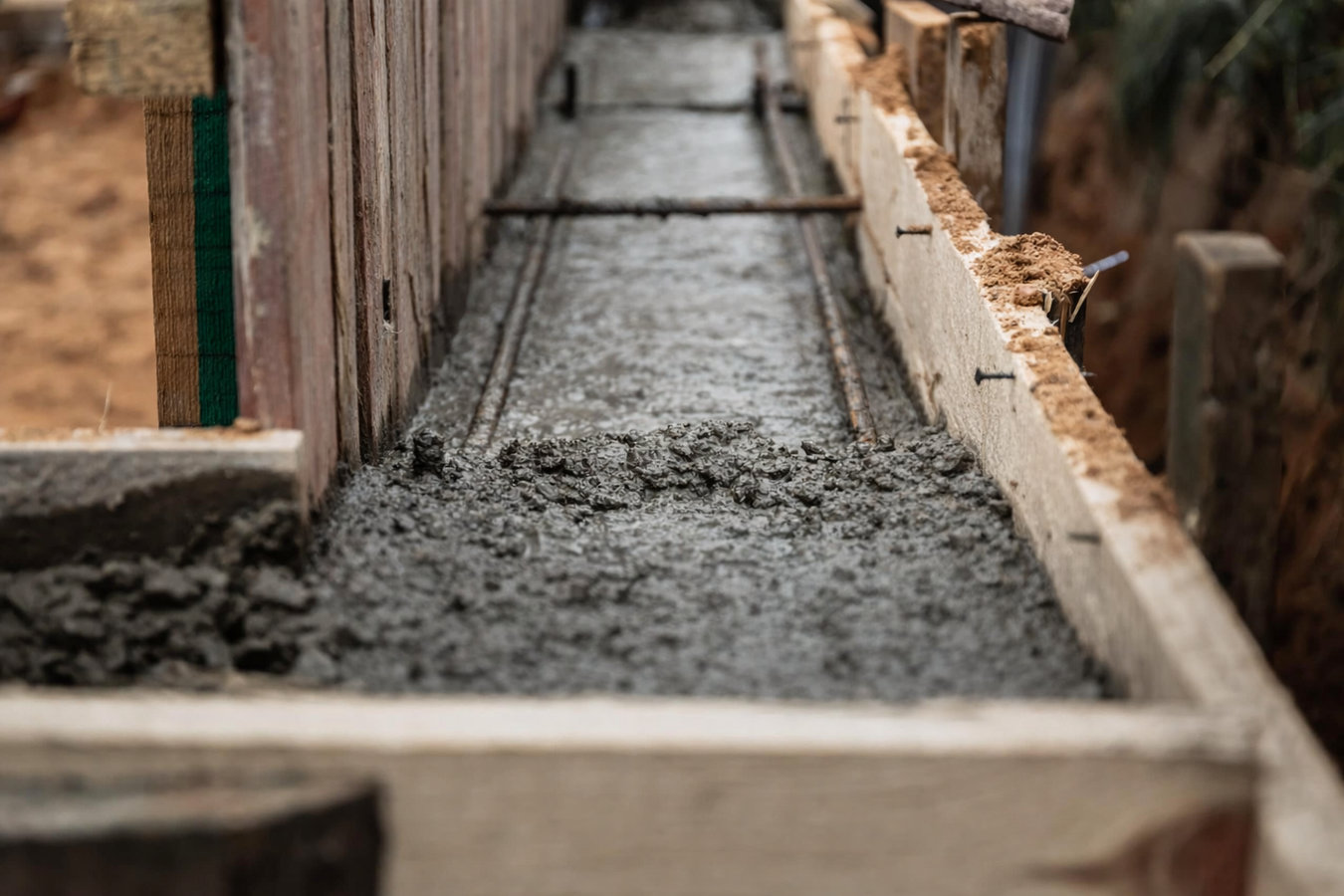
Once the permit is in hand, we excavate and grade the area, compact the subgrade, and install the steel reinforcement inside the forms. A city inspector visits to verify the steel is correctly placed before the concrete is poured - nothing gets covered until the inspector signs off. Take a photo of the rebar if you are curious about what is inside your foundation.
The concrete is delivered by truck and poured in a single continuous operation. In El Monte's summer heat, we schedule pours for early morning and protect the fresh surface during the hottest part of the day. Once cured, a final city inspection closes the permit. You receive signed documentation confirming the foundation meets current standards - keep it with your home's records.
We visit your El Monte property, assess the soil and existing conditions, and give you a written estimate with no obligation. Permits, inspections, and soil coordination are all on us - not on you.
(626) 416-2401Every foundation we install is covered by an active California C-8 Concrete Contractor license. You can look up our license number on the California Contractors State License Board website in about two minutes - it shows the license status, type, and any disciplinary history. We encourage every homeowner to check before signing.
The San Gabriel Valley's expansive clay soils are mapped by the California Geological Survey as high-risk territory for foundations. We account for that soil behavior in every design - from the depth of excavation to the reinforcement schedule. What this means for you is a foundation that is built for what is actually under your property, not a standard pour applied everywhere.
El Monte sits near the Whittier Fault and other active systems in one of the most seismically active regions in the country. Every foundation we build includes the steel reinforcement and design details required by California's current seismic standards - not the lighter requirements that were typical in the 1950s and 1960s when much of El Monte's housing was first built.
Since 2022, we have worked on foundation projects across El Monte, West Covina, Baldwin Park, and the surrounding San Gabriel Valley communities. That history means we know El Monte's permit office, understand the local soil conditions firsthand, and have seen the range of conditions that older homes in this area present.
Foundation work in El Monte is more complicated than in most of the country - the soil moves, the ground shakes, and the permit process has specific steps that require local familiarity. That combination is why we build every foundation here as if the inspector is watching, because they are - and because what goes under your home is the one thing you cannot easily revisit once the concrete sets.
For contractor verification, visit the California Contractors State License Board. For permit requirements specific to El Monte, the El Monte Building and Safety Division is the official source.
Commercial-grade concrete for parking surfaces and commercial driveways requiring the same permit and inspection process as foundation work.
Learn moreFocused slab-on-grade work for additions, ADUs, and garages where a straightforward flat pour is the right solution.
Learn morePermit season in the San Gabriel Valley fills up fast - the sooner your application is in with El Monte's building department, the sooner we can lock in your start date and get your project on the schedule.